Strengthening preparedness
Improving processes
Building resilient public systems
Public organizations face increasing demands with limited time, staff, and resources.Nightingale Public Solutions works alongside local governments, regional partnerships, and institutions to strengthen preparedness, improve coordination, and make meaningful progress. Whether supporting planning efforts, guiding discussions, facilitating exercises, or helping teams learn from experience, the focus is always on practical solutions that make a difference.
A DIFFERENT KIND OF SUPPORT
Not every challenge requires a large consulting team. Nightingale Public Solutions offers a hands-on approach, working directly with organizations to understand challenges, engage stakeholders, and help move important work forward.
Services
Planning & Preparedness
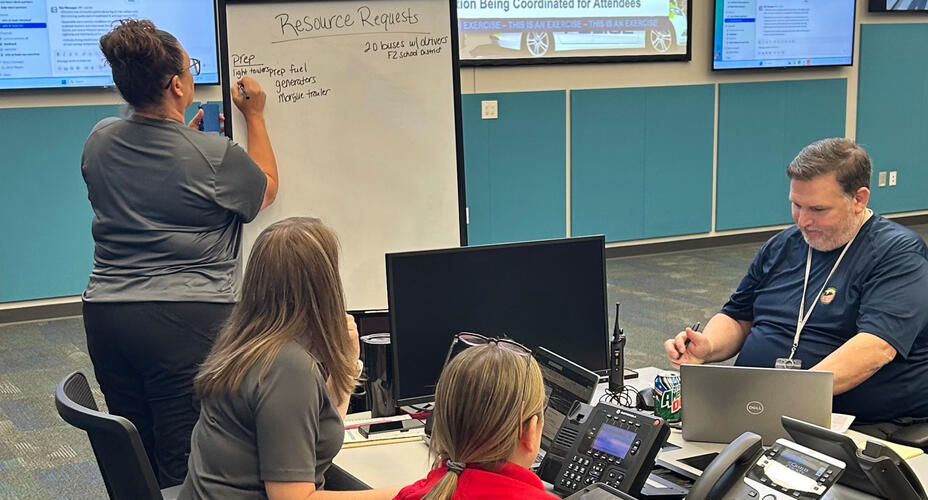
Partnering with organizations to create plans and procedures that people can actually use. By understanding how work gets done and involving those closest to it, planning efforts become practical, useful, and ready when they are needed most.
Exercises & Facilitation
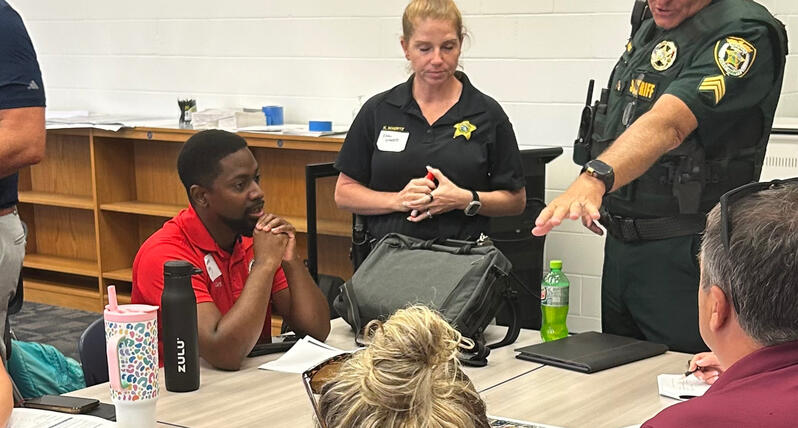
Guiding organizations through exercises and conversations that help teams think through challenges, work together more effectively, and build confidence. These activities create space to learn what is working well, identify areas for improvement, and make practical changes before they are needed.
Organizational Improvement
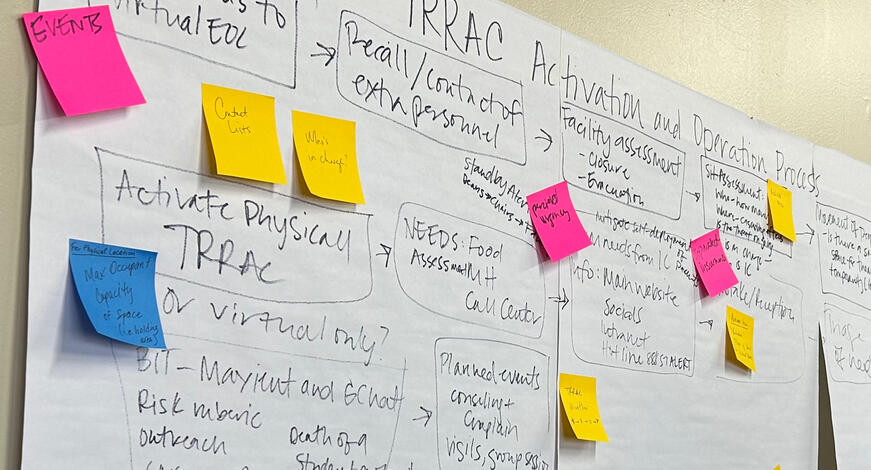
Working alongside organizations to take a fresh look at how work gets done. Through conversations and collaboration, we identify what's working well, where teams are running into challenges, and what changes could make everyday work easier and more effective.
Projects
Click below to explore Nightingale’s recent and ongoing projects or browse by topic.

Projects
Click below to explore Nightingale’s recent and ongoing projects or browse by topic.

Projects
Click below to explore Nightingale’s recent and ongoing projects or browse by topic.
Projects
Click below to explore Nightingale’s recent and ongoing projects or browse by topic.
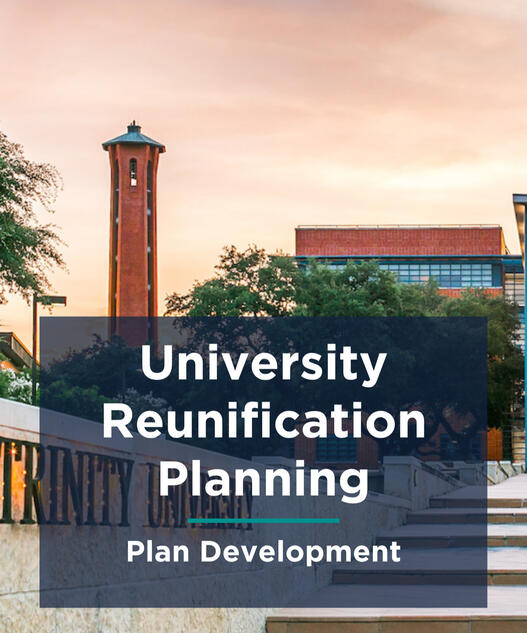
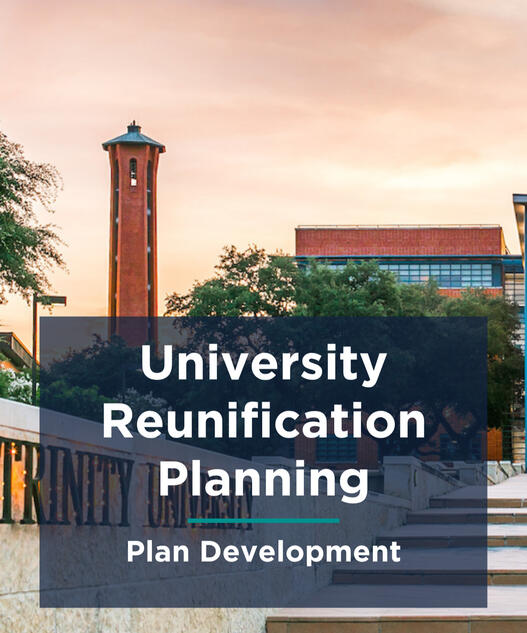
Trinity University
Reunification & Recovery Assistance Center
Plan Development Project
Key Outcome
A practical, function-based reunification and recovery framework that helps campus personnel understand their roles, coordinate across departments, and respond more effectively during high-stress situations when normal operations are disrupted.
The Need
Following a major incident, universities must quickly reunify students, employees, and families while coordinating recovery activities across multiple departments. Existing planning materials often define responsibilities by department, making coordination difficult when staff are operating outside their day-to-day roles.
The Solution
Nightingale worked with Trinity University stakeholders to assess existing plans, conduct interviews, and facilitate process mapping exercises. Through this collaborative process, reunification and recovery activities were organized into a function-based operational framework that clarified responsibilities, strengthened coordination, and identified opportunities for improvement.The planning effort was then translated into department-level actions and checklists, providing practical guidance for personnel operating in high-stress and unfamiliar circumstances.
The Result
The university gained a clear and actionable reunification and recovery framework that supports coordinated decision-making across campus partners. By defining how critical functions operate in real time and providing practical implementation guidance, the plan helps personnel respond more effectively when normal operations are disrupted.
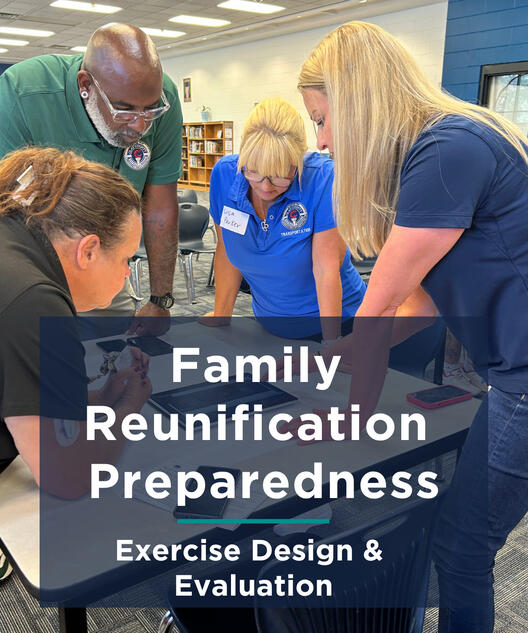
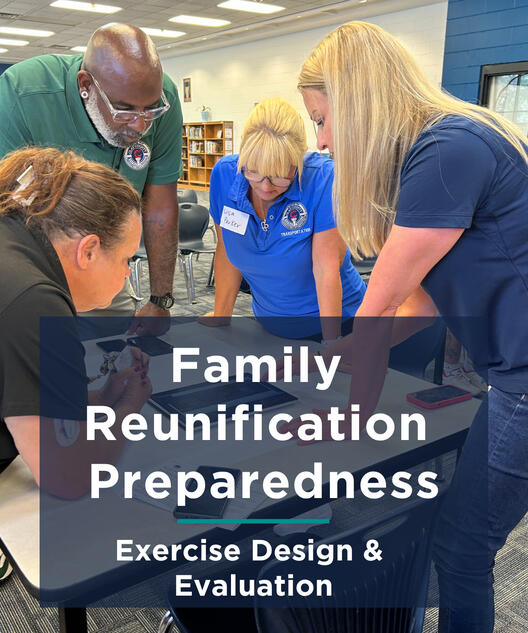
Family Reunification & Assistance Center
Exercise Design & Evaluation
Key Outcome
The project provided participating organizations with a practical opportunity to test plans, clarify roles, and strengthen coordination across agencies involved in family reunification and assistance center operations, improving readiness for complex, large-scale incidents.
The Need
Family reunification and assistance center operations require multiple organizations to work together under challenging circumstances, often performing unfamiliar roles while supporting affected individuals and families. Plans and procedures must be coordinated across agencies, tested under realistic conditions, and understood by personnel before they are needed during a real-world incident.
The Solution
Nightingale supported regional preparedness initiatives in the St. Louis and Jacksonville urban areas focused on family reunification and assistance center operations. Working with public safety, emergency management, healthcare, and partner organizations, Nightingale reviewed planning documents, designed and facilitated tabletop and full-scale exercises, and developed detailed simulation environments to test critical operational functions.The exercises addressed reunification operations, information management, interagency coordination, staffing, and service delivery, providing participants with opportunities to validate plans and identify areas for improvement.
The Result
A coordinated approach to family reunification and assistance center operations that helps participating organizations understand their roles, strengthen partnerships, and deliver services more effectively during complex incidents involving affected individuals and families.
This project was completed in partnership with Porsena Solutions. Learn more about their work here.
Kansas City 2026 World Cup
Regional Safety & Security
After-Action Review & Strategic Plan
Key Outcome
A clear framework for translating lessons learned from World Cup planning and operations into future homeland security priorities, helping regional leaders align investments, focus resources, and measure progress against shared preparedness goals.
The Need
The 2026 World Cup represented one of the most complex and resource-intensive events ever supported in the Kansas City region. While the event required extensive planning, coordination, and operational support across agencies and disciplines, regional leaders recognized that the greatest long-term value would come from capturing lessons learned and using those insights to inform future preparedness efforts.Regional partners sought a structured process to evaluate what worked well, identify opportunities for improvement, and ensure that lessons from the World Cup experience were reflected in future homeland security priorities. With multiple organizations involved and an accelerated timeline for updating the region's strategic plan, stakeholders also needed an independent facilitator with the capacity to gather perspectives, synthesize findings, and build consensus around future priorities.
The Solution
Nightingale is supporting regional stakeholders through a comprehensive after-action review and strategic planning process. The project includes stakeholder interviews, surveys, facilitated discussions, site visits, document review, and qualitative and quantitative analysis to evaluate regional safety, security, and preparedness activities associated with the World Cup.Findings from the after-action review are being integrated into the region's 2027-2029 Homeland Security Strategic Plan, helping regional partners not only capture lessons learned but also establish clear priorities for the future. Through a facilitated strategic planning session, policy alignment, and performance measure development, the project provides a roadmap for guiding investments, strengthening capabilities, and supporting informed decision-making in a constrained funding environment.
The Result
The project transforms lessons learned from World Cup planning and operations into a practical roadmap for future action, helping regional partners clarify priorities, align resources, measure progress, and make informed decisions about capability development in an evolving funding environment.
This project was completed in partnership with Porsena Solutions. Learn more about their work here.
Situation Reports: Insights from the Field
Explore insights and reflections from Nightingale’s work. Each post begins with a clear Bottom Line Up Front (BLUF) to frame the discussion, followed by practical observations and evolving approaches to coordination, preparedness, and recovery.
Are we solving the right problems?
Why Lessons Learned Don't Always Lead to Change
Organizations often move from observation to action item before fully understanding the problem they are trying to solve. This article explores root causes, improvement planning, and how to evaluate whether change is actually occurring.Posted August 2026
Designing Processes That Work
Using Process Mapping in Emergency Planning
Emergency plans are often built around organizational charts instead of how work actually happens. This article explores how process mapping can improve coordination, usability, and implementation.Posted June 2026
Designing Processes That Work
Using Process Mapping in Emergency Planning
June 2026 | 5 minute read
Bottom Line Up Front
Emergency plans need to be designed around how work actually happens and how support is delivered under pressure—not just how organizations are structured—so teams can act quickly and with clarity when it matters most.
Key Takeaways
1. Design the process first; roles and ownership should follow2. Plan for real conditions, not ideal scenarios3. Make actions clear, simple, and usable under pressure
Rethinking Where Planning Starts
Emergency planning often begins with roles and responsibilities—who does what, which department leads, and how functions are assigned. That approach works on paper. But in practice, especially during a fast moving incident, it often breaks down.In those moments, people aren’t thinking in terms of departments. They’re trying to figure out:
• Where do I go to get help?
• Who is responsible?
• What happens next?And staff are doing the same—stepping into roles that aren’t part of their day to day work, making decisions under pressure, and trying to coordinate across teams in real time.That gap between structure and reality is something I’ve been thinking more about, especially in how to bring process mapping and user-centered design into emergency planning. Recently, I had the opportunity to apply this approach in a university planning effort focused on reunification and immediate recovery operations, and it reinforced a few key ideas.
Start With the Process, Not the Org Chart
This approach starts with something deceptively simple: mapping the process. Not how departments are organized. Not who “owns” what. But what actually happens, step by step, when someone needs help.What happens first? What happens next? Who is involved at each step?Walking through that sequence creates a shared understanding of how work actually flows across functions. It also shifts the conversation from “this is what my department does” to “this is what needs to be done.” This is a very subtle shift, but the change allows the process to be designed first, with roles and ownership following.In my experience, this is not how most emergency planning discussions are structured, but it creates a much clearer and more coordinated foundation for how work actually gets done.
What Process Mapping Reveals
When you map the process (literally on a whiteboard) and walk through it under realistic conditions, issues start to emerge. The planning team can visualize (again, literally, with colored sticky notes):
• Where steps become harder to maintain as volume increases
• Where coordination depends on a few key individuals
• Where lag time makes it harder to get operations up and running quickly
• Where tools could reduce real time decision makingThese are the kinds of challenges that don’t always show up in planning documents, but they surface quickly when you focus on how work actually unfolds.
Designing for Real Conditions
Another shift that happens through this approach is recognizing the difference between ideal plans and real conditions.Most plans are written assuming:
• Full staffing
• Clear information
• Readily available resources
• Stable operationsReal incidents rarely provide these ideal conditions. Planning needs to account for competing priorities, limited staff, after hours operations, incomplete or conflicting information, and unpredictable demand.
From Process to Action
Mapping the process is only the first step. The next is ensuring it is usable.One of the most practical ways to do that is by translating the process into clear, actionable checklists that teams can follow during an incident.Instead of long narrative plans, the focus becomes checklists of critical considerations, such as:
• What needs to happen immediately, what starts in the first hour, what must continue through the first 24 hours, etc.
• How and where the work gets done
• Critical considerations and remindersThis isn’t about adding more detail. It’s about making the work clearer. Because in a real incident, staff need simple, practical guidance to step into unfamiliar roles and carry out critical tasks without hesitation.
The Next Step: Designing for the Experience
If process mapping helps define how work gets done, the next phase is testing how that process is experienced.The critical next step is walking the process from the perspective of people seeking help in the immediate aftermath of a crisis—many of whom may not yet know what they need or how to ask for it. This is where user-centered design comes in.This raises questions like:
• Would someone know where to go first?
• Would they know what to ask?
• Would they get information?
• Would they feel like someone is responsible for helping them?
• Where might they get stuck, redirected, or overlooked?
• And (most importantly) how many times are they telling their story at each redirection?I’ve found real value in bringing these principles into emergency planning—not as a separate layer, but as a natural extension of process design. Because even a well coordinated process can fall apart if it doesn’t make sense to the people navigating it.
Why This Work Matters
Incidents are fast-moving, high-stress, and unpredictable. But that unpredictability doesn’t have to result in unclear roles, disjointed actions, or inconsistent support. Starting the process by understanding how work actually happens, designing for real conditions, and translating that into clear action creates a stronger, more coordinated response. It also highlights an important gap in many planning efforts: the need to think beyond immediate response and intentional threat neutralization, and to be equally deliberate about how people are supported in the hours and days that follow.If you’re working through similar challenges or thinking about how to strengthen coordination during recovery, I’d welcome the opportunity to connect and learn how you and others are approaching this work.
Are we solving the right problems?
Why Lessons Learned Don't Always Lead to Change
Situation Report | August 2026 | 5 minute read
Bottom Line Up Front
Organizations often move from observation to action before fully understanding the problem they are trying to solve. Meaningful change requires identifying root causes, focusing on outcomes rather than activities, and defining how progress will be measured.
Key Takeaways
1. Observations are not root causes2. Measure outcomes, not activities3. Meaningful change requires ongoing evaluation
After an exercise or real-world incident, most organizations are surprisingly good at identifying what worked and what didn't. The hotwash is productive. Observations are documented. Stakeholders generally agree on what should change. By the time an after-action report is complete, there is often a clear understanding of the challenges that need to be addressed.Yet months later, many of the same observations remain unresolved.
In emergency management, we often think of this as an implementation problem. An issue was identified, an action item was assigned, and somehow progress stalled.I've spent a lot of time thinking about after-action reviews and performance measurement recently. At first glance, they seem like different topics. One focuses on preparedness and emergency management. The other focuses on organizational performance and improvement. The more I think about it, however, the more I believe they are trying to answer the same question:How do we know if we're getting better?After-action reports identify observations. Improvement plans assign actions. Performance measures help us understand whether those actions made a difference. All three are part of the same learning cycle.
Observations Are Not Root Causes
One pattern I have observed in after-action reviews is how quickly conversations can move from observations to recommendations. A challenge is identified. An action item is assigned. A deadline is established. Everyone agrees to move forward.In many cases, we assign people tasks before we've fully explored whether we've identified the right problem.But sometimes the most important conversation never happens: Why did this occur in the first place?An observation is often a symptom, not a root cause. For example, an exercise may reveal communication challenges between departments. The improvement plan might recommend updating a procedure, conducting additional training, or purchasing a new tool. All of those actions may be valuable. But before deciding on a solution, it is worth understanding what actually contributed to the issue.Was there a lack of training? Unclear expectations? Competing priorities? Limited staffing? A process that no longer matches how work is performed? Different root causes require different solutions. Without taking time to understand the problem, organizations run the risk of implementing actions that address symptoms while leaving the underlying issue unchanged.
Action Items Are Not Outcomes
Many improvement plans contain a familiar structure:
Observation > Action Item > Responsible Party > Due DateThose elements are important. They create direction and help organizations organize work. However, they primarily answer one question: What are we going to do? They rarely answer another equally important question: How will we know if it worked?Completing an action item is an activity. Improvement is an outcome. The two are related, but they are not the same. Updating a procedure does not automatically improve coordination. Conducting training does not automatically improve performance. Creating a checklist does not automatically improve decision-making. The action may be completed exactly as intended and still fail to produce meaningful change.For example, consider an improvement item that states: Update emergency notification procedures. The task itself is straightforward. But what does success look like? Are notifications sent faster? Do more stakeholders receive the information they need? Is there greater confidence in the process? Are fewer communication issues identified during future exercises?Without defining what success looks like, it becomes difficult to determine whether the improvement effort actually improved anything. The focus shifts from outcomes to task completion.
Progress Should Be Evaluated, Not Assumed
Preparedness is notoriously difficult to measure.It is easy to count plans completed, exercises conducted, or personnel trained. It is much harder to determine whether coordination is stronger, decisions are better, or organizations are more resilient.That challenge does not mean measurement is impossible. It means measurement should be intentional.Meaningful measures should matter to both the people carrying out the work and the people who benefit from the outcome. If an organization implements a new process, updates a procedure, or conducts additional training, there should be a shared understanding of what success looks like and how progress will be evaluated. Otherwise, task completion can easily be mistaken for improvement.Just as importantly, evaluation creates opportunities for reflection. Did the action address the problem we identified? Did it solve the right problem? Would we make the same recommendation again today? These questions are often more valuable than whether an action item was completed on time.
Final Thought
After-action reviews create opportunities to learn. Improvement plans create opportunities to change. The gap between the two is often where organizations struggle.Too often, we move from observation to action item without fully understanding the problem, and from action item to closure without evaluating whether the solution achieved the desired outcome.The organizations that improve over time are not necessarily the ones with the longest improvement plans. They are the ones willing to spend time understanding problems, designing thoughtful solutions, and evaluating whether those solutions are producing meaningful results.Because completing the action item is not the goal. Improvement is.
About Nightingale
After years in emergency management and public sector innovation, Leigh Middleton recognized that many organizations were facing the same challenge: important work competing with limited capacity, competing priorities, and day-to-day operational demands.Nightingale Public Solutions was created to provide the kind of flexible, practitioner-led support that helps organizations move important work forward. Drawing on experience in emergency management, organizational improvement, stakeholder engagement, and strategic initiatives, Nightingale helps public sector organizations strengthen preparedness, improve coordination, and develop practical solutions to complex challenges.Through a hands-on and collaborative approach, Nightingale partners with clients to enhance preparedness, refine operations, facilitate stakeholder engagement, and build systems that perform effectively both in daily operations and during times of disruption.
I spent years in emergency management and public sector innovation. I saw organizations struggling with capacity and competing priorities. Nightingale was created to provide the kind of flexible, practitioner-led support I often wished existed.


Leigh Middleton
Founder & Principal Consultant
Why "Nightingale"?
Nightingale Public Solutions is inspired by Florence Nightingale’s pioneering use of data and evidence to prevent harm, improve systems, and solve complex public problems. Long before data-driven decision making became a standard practice, Nightingale demonstrated how careful analysis, clear communication, and thoughtful planning could transform institutions and save lives.In that same spirit, Nightingale Public Solutions partners with public agencies to apply evidence, systems thinking, and practical implementation to today’s challenges—strengthening preparedness, improving performance, and building resilient public systems that endure.

Leigh Middleton
Founder & Principal Consultant
Leigh Middleton is an experienced public sector leader who helps organizations navigate complexity, strengthen coordination, and move important work forward.With more than 16 years of experience spanning emergency management, public sector innovation, community development, and organizational improvement, Leigh brings a practical, implementation-focused perspective to every project. She has led initiatives involving government, nonprofit, private sector, and community partners, helping organizations align priorities, improve processes, and translate ideas into actionable solutions.Prior to founding Nightingale Public Solutions, Leigh spent more than a decade with the City of San Antonio in both emergency management and innovation roles. During that time, she developed emergency plans, designed and evaluated exercises, facilitated regional preparedness initiatives, led process improvement efforts, and supported strategic projects focused on service delivery and organizational performance.Leigh holds a Master of Public Administration with a concentration in Emergency Management and a Bachelor of Arts from the University of North Texas. She is a Certified Emergency Manager (CEM), Master Exercise Practitioner (MEP), Project Management Professional (PMP), and Lean Six Sigma Green Belt. She also served in the Peace Corps in Costa Rica from 2012 to 2014, an experience that shaped her commitment to service, adaptability, and community-centered problem solving.
Contact Us
Have a question? Want to connect about a potential project? Reach out and we will get back to you by email.